Car Hire in Sydney: Excess, Deposit and What Gets Added at the Counter
10 min read

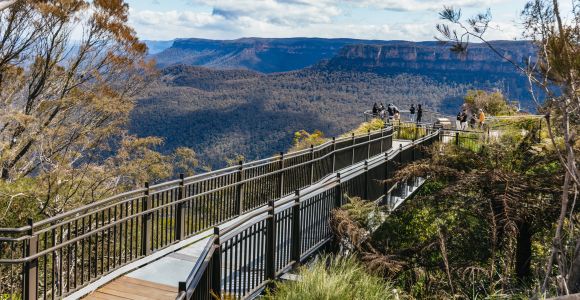
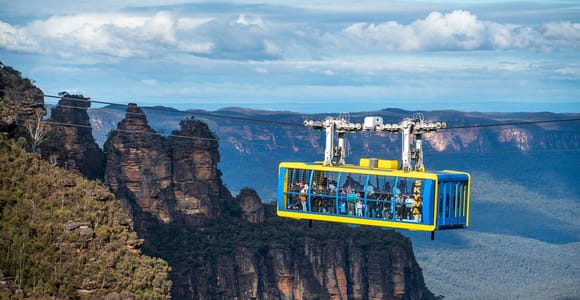
Ask for four figures before you pay anything: the excess, the deposit, the toll administration fee and the young driver surcharge if anyone in your group is under 25. Every one of them is knowable in advance, none of them appears on the price you first see, and together they are the reason a cheap daily rate turns into an expensive week. And if the only reason you were hiring a car was one day out of the city, check the alternative first: the Blue Mountains tour with secluded lookouts and waterfalls runs ten and a half hours for €65.68, with 938 reviews at 4.6, and nobody has to find a car park at Echo Point.
Check dates and prices for the Blue Mountains tour
Car hire prices are quoted the way airline fares are quoted: the number that draws you in is not the number on your statement. In Australia the gap is wider than in most of Europe, because the two largest additions – damage cover and tolls – are both optional-looking and both easy to misunderstand.
This article is about the money. It deliberately does not tell you what your rental will cost, because nobody can: the figures depend on the company, the vehicle class, your age, the season and the branch. What it does instead is name every place a charge can appear, and say plainly which numbers are published and which are not.
One warning before the detail. If a figure below is not attributed to a named company or authority, treat it as something to verify on your own rental agreement. A wrong number about a deposit is not an inconvenience – it is your card declining at a counter in a different hemisphere.
Excess is not the deposit, and this is where most confusion starts
Three different amounts get muddled together, and they do entirely different things.
| Term | What it is |
|---|---|
| Excess | The amount you pay towards damage to the car if something happens. Included in the rate by default, at a level set by the company. |
| Deposit (bond) | An amount blocked on your card at pickup and released afterwards. Not a charge – but it does reduce your available credit while you travel. |
| Damage waiver / CDW | An optional product bought at the counter or online that reduces the excess, sometimes to zero. |
The Australian word is excess. If you are used to the American term “deductible”, it is the same idea. And “full cover” in a rental context means a damage waiver, not comprehensive motor insurance – the vehicle is insured either way; what you are buying is a reduction in your own liability.
The excess amount itself is not something this article can give you. It varies by company and by vehicle class, it is stated on the rental agreement, and it is the first figure to look for when you compare offers. A cheap daily rate attached to a high excess is not a cheap rental; it is a bet.
The deposit: what gets blocked, and on what card
Here the published terms are specific, and they matter more than the amounts.
Avis and Budget both require a physical, valid credit or debit card presented at the counter in the name of the hirer. Neither accepts a card shown on a phone or watch, neither accepts contactless tap-and-go for this purpose, and Avis explicitly excludes prepaid cards, reloadable stored-value cards, travel money cards and EFTPOS cards.
That last point strands people every summer. A travel money card is exactly the sort of thing a careful traveller loads up before a long trip, and it is exactly the sort of thing that will not open a rental.
On amounts, both companies publish a refundable security deposit of A$1,000, reduced to A$500 if a zero-excess product is taken – but they state this for renters resident in Australia, and it is not automatically the figure a visitor will see. Separately, for bookings paid at the counter using a debit card, both describe a hold of the rental amount plus A$200.
What to do with that: assume something in the region of four figures will be unavailable on your card for the duration, ask the exact amount when you book rather than at the desk, and do not travel with a card whose limit leaves no room for it.
The counter add-on that costs more than the car
Hertz publishes its SuperCover damage waiver from $46 per day on standard vehicles and from $52 per day on AWD/4WD, minivans, light commercial vehicles, buses and prestige cars, and it reduces the excess to zero.
Check the currency on that figure. Hertz gives those amounts on a page it shares between Australia and New Zealand, written as plain dollars, and the terms referenced alongside them are the New Zealand ones. Treat the numbers as the right order of magnitude and get the Australian amount confirmed at booking rather than assuming it.
Whatever the exact figure turns out to be, it is charged per day, not per rental, and that is what makes it significant: over a week it becomes one of the largest lines on the bill. That does not make it a bad purchase – a zero excess on a week of unfamiliar left-hand-side driving is a defensible thing to buy – but it does mean it belongs in your budget from the start rather than as a surprise decision made while tired at an airport desk.
Two alternatives exist and both need checking before you fly, not at the counter:
- Your own travel insurance may cover rental excess. Many policies do; many exclude it. The exclusion to look for is not “car hire” but the excess specifically.
- Your credit card may include rental cover as a benefit. This typically requires the rental to be paid in full on that card, and often excludes certain vehicle types.
If either applies, you decline the counter product and carry proof. If neither does, buy it, and price it in when you compare rates and inclusions rather than sorting by daily rate alone.
Tolls: the charge that arrives after you have gone home
This is the specifically Sydney problem, and it catches almost everyone.
Every toll road in Sydney is cashless. There are no booths. You simply drive, and the road records your number plate. The NSW Government states that a driver who uses a toll road without an active account or pass will have an Unpaid Toll Reminder and then a Toll Payment Demand sent to the registered operator of the vehicle – which, in a hire car, is the rental company, not you – and that the demand includes the toll plus a video matching fee per trip.
In practice most hire cars in Sydney are fitted with an electronic tag, the tolls are recorded against your rental agreement, and the total is charged to your card after you return the car. The rental company’s own administration fee is added on top, and the NSW Government’s advice is simply to contact your rental provider to confirm their toll payment process. That is the correct advice and also an admission that the arrangement differs by company.
Three practical consequences:
- Ask at pickup how tolls are handled and what the administration fee is. It may be charged per day of the rental rather than per toll – which changes the arithmetic completely on a week’s hire with two toll crossings.
- Do not bring your own tag or buy a separate pass unless the rental company tells you the car has none. Two active accounts on one vehicle is how people get billed twice.
- Expect the charge weeks later. It is not a mistake and it is not a fraud attempt on your card.
If you want to know what you are running up as you go: the Harbour Bridge and Harbour Tunnel are tolled southbound only, at A$4.55 in weekday peaks and between A$2.85 and A$3.41 otherwise. The motorways are dearer – the Eastern Distributor A$10.48, the M2 and NorthConnex A$10.64 each, the Cross City Tunnel A$7.41. Avoiding them is often possible and occasionally sensible; that is discussed in whether you need a car here at all.
Who is allowed to hire, and with what licence
The requirements are published and they are firmer than many visitors expect.
- Minimum age 21 at both Avis and Budget in Australia. Drivers under 25 are restricted to certain vehicle categories – broadly the smaller passenger cars – regardless of what they book.
- A full licence held for at least twelve consecutive months. Budget states this explicitly and excludes learner, provisional and restricted licences.
- An English licence, or a translation. If your licence is not in English you must carry an approved English translation or an International Driving Permit alongside it. The IDP does not replace your licence; it accompanies it.
- In NSW specifically, a visitor may drive on an overseas licence for up to six months. Beyond that, someone intending to reside here needs a NSW licence. For a holiday this is not a constraint, but it is the rule the hire company is working to.
A young driver surcharge exists and this article will not give you a figure for it. Companies confirm that a surcharge applies to drivers under 25 without publishing the daily amount in their general terms – Europcar goes as far as “a small surcharge” and refers you to the booking team. Get it quoted in writing before you book, because “small” is not a number and it is charged per day.
Three day trips that remove the need for a car
If the hire car exists only to get you out of Sydney for a day or two, these do the same job without a deposit, an excess or a toll bill arriving three weeks later.
| Offer | Length | From | Rating | Suits |
|---|---|---|---|---|
| Blue Mountains with secluded lookouts and waterfalls | 10h 30m | €65.68 | 4.6 (938 reviews) | anyone whose only reason for a car was the mountains |
| Secret Coastline: Kiama blowhole and Wollongong wildlife | 10 hours | €91.71 | 4.7 (111 reviews) | visitors who do not want to learn left-hand driving on a cliff road |
| All-inclusive boutique Hunter Valley wine tour | 10 hours | €155.76 | 4.8 (102 reviews) | groups where nobody wants to be the one staying sober |
Compare availability for the Hunter Valley wine tour
Our recommendation
If you are hiring, get the four figures in writing first — excess, deposit, toll administration fee, young driver surcharge — and assume the damage waiver is a daily charge rather than a one-off. There is one trip from Sydney where the car genuinely earns its keep, and the coastal drive south is it. Hire for those two or three days rather than for the whole stay.
For most visitors who were only hiring to see the mountains, don’t. The Blue Mountains tour with secluded lookouts and waterfalls at €65.68 is ten and a half hours, 4.6 from 938 reviews, no deposit on your card and no toll bill weeks later. What it costs you is flexibility: you stop where the bus stops, for as long as the bus stops.
For the south coast, the Secret Coastline day trip at €91.71 is the one to take if unfamiliar left-hand driving on a winding cliff road is the part you were dreading. That road is also the single best argument for hiring a car, so this is a genuine trade rather than an obvious win.
For a wine region, never hire. The all-inclusive boutique Hunter Valley tour at €155.76, 4.8 from 102 reviews, is the most expensive of the three and the easiest decision on this page: a day of tastings and a driver costs less grief than a car plus one person who cannot drink. It is poor value for a solo traveller who was happy to be the designated driver anyway.
Whether you need a car at all is a separate question, and we have answered it in do you need a car in Sydney?
Hire terms and prices are as published by Avis Australia, Budget Australia, Hertz Australia and Europcar Australia, and toll and licence rules as published by the NSW Government. All of these change, and none of them is a substitute for the rental agreement you are asked to sign.